Leave Your Message

2026 Top Juniper EX Switches for Global Buyers

Choosing the right Juniper Ex Switches in 2026 requires more than comparing port counts and list prices. Global buyers must examine deployment conditions, software licensing, support coverage, energy use, and long-term upgrade paths. A compact office in Singapore may need quiet, low-power access switching. A European campus may prioritize resilient uplinks, segmentation, and strict operational controls. A regional data center may demand high-density 10GbE or 25GbE connections.

Rami Rahim, former Juniper Networks CEO, described the network as “the foundation of the digital world.” That view remains practical. A switch is not merely a metal box with blinking LEDs. It sits beneath voice calls, warehouse scanners, cloud applications, security cameras, and business-critical traffic. The EX4100, EX4400, and EX4650 families can suit different environments, but the best choice depends on actual traffic patterns and management skills. Product names alone cannot decide that.

This guide examines leading Juniper Ex Switches for international purchasing teams. It considers access, aggregation, campus, and data center use cases. It also looks at Mist management, Virtual Chassis capabilities, PoE budgets, automation, and warranty expectations. Some rankings may remain debatable. That is useful. A lower-cost model can become expensive after licensing, optics, support, and installation are included. Buyers should test assumptions with current specifications and regional partners before placing orders. Small details matter. A missed uplink requirement can reshape the entire project.
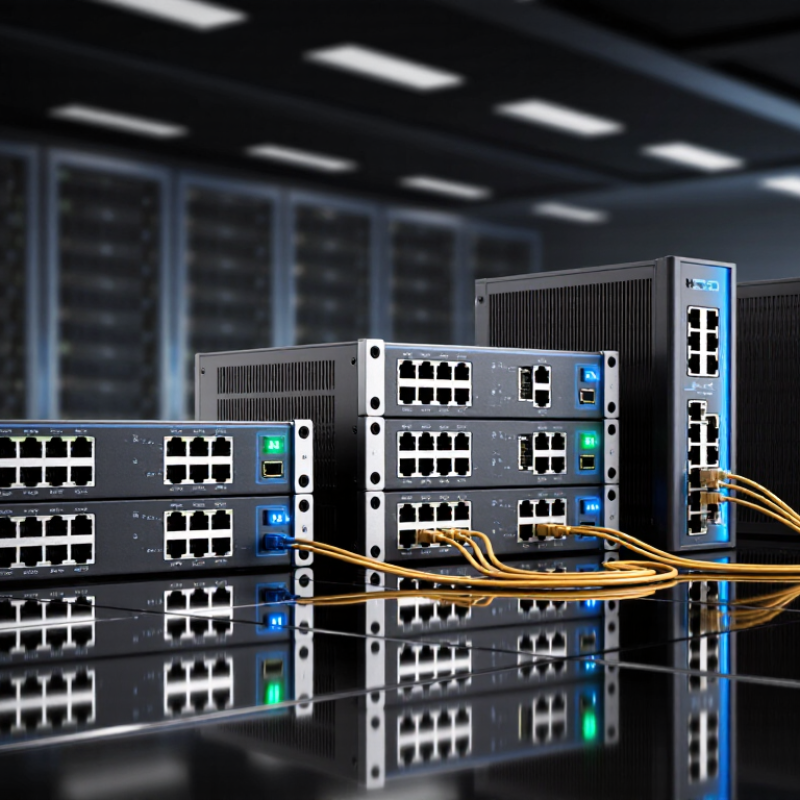
2026 Top Juniper EX Switches for Global Buyers

Juniper EX Switches: Overview and Core Networking Concepts

Enterprise switching is easier to understand as a traffic-control system. A switch learns MAC addresses, separates VLANs, and forwards frames efficiently. Layer 3 interfaces add routing between departments, buildings, and remote sites. This reduces unnecessary broadcast traffic.

Modern campus switches often support stacking, redundant uplinks, PoE, and automated telemetry. VXLAN with EVPN can extend segmentation across larger environments. However, these features increase design and troubleshooting demands. Simpler networks may perform better when their operational teams are small.

According to Synergy Research Group, hyperscale capital expenditure reached approximately 291 billion dollars in 2024. That investment increases pressure on enterprise networks to deliver stable, high-speed connectivity. The IEEE 802.3 standards define Ethernet speeds, while IEEE 802.1Q supports VLAN tagging and logical separation. These standards help global buyers compare specifications more objectively.

Details matter. A crowded wiring cabinet needs clear airflow, labeled cables, and realistic PoE budgets. A remote branch may value quiet operation and simple replacement procedures more than advanced overlays. Field assessments often expose an uncomfortable truth: maximum port density is not always the best value. Firmware discipline, telemetry quality, and recovery testing deserve equal attention. I would also question vendor-provided performance claims without independent workload testing.
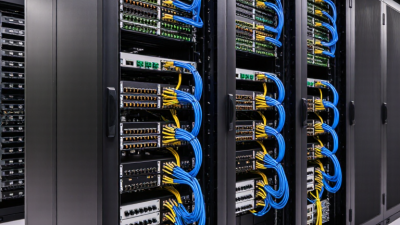

2026 Selection Criteria for Global Juniper EX Switch Buyers

Global buyers selecting enterprise access switches in 2026 should begin with deployment conditions, not port counts.

IDC’s Worldwide Ethernet Switch Tracker reported continued demand for higher-speed campus and data-center connectivity in 2024. That shift makes uplink capacity important. A 48-port access switch may need 10GbE or faster uplinks, especially in dense offices, hospitals, and education sites. Check PoE budgets carefully. Cameras, wireless access points, and badge readers can consume power quickly. Rack depth and operating temperature matter too.

Security and lifecycle support require equal attention.
The 2024 Verizon Data Breach Investigations Report linked many incidents to stolen credentials and vulnerable systems. Buyers should evaluate role-based access, device authentication, network segmentation, and centralized monitoring. Regional certifications, local service coverage, spare-part availability, and software support periods can change the real cost. Dell’Oro Group’s market research continues to show strong investment in cloud and enterprise networking, but forecasts are not guarantees. Your traffic pattern may differ.

Tips: Request a 30-day pilot with real PoE devices. Measure boot time, failover, noise, heat, and configuration effort. Test mixed-vendor interoperability before signing a global contract. Keep written acceptance criteria. A lower purchase price can hide expensive optics, licenses, training, or replacement delays. I would also challenge optimistic capacity estimates; morning traffic is rarely the worst case. Some buyers overlook maintenance windows. That mistake becomes visible during a regional outage.

Top Juniper EX Switch Families and Their Primary Use Cases

Top Juniper EX Switches for Global Buyers

The main EX switch families serve different network layers and operating conditions. Compact access models fit small offices, classrooms, and retail sites. They usually provide 24 or 48 copper ports, with optional PoE for phones, cameras, and wireless access points. Larger access platforms add stronger uplinks, redundant power, and higher PoE budgets. They suit hospitals, factories, and dense campuses.

Aggregation models belong in distribution closets and campus cores. Their role is simple: collect access traffic and move it reliably upstream. Look for 10GbE, 25GbE, or 100GbE uplinks, depending on building size and traffic patterns. Data-center families support leaf-spine designs, EVPN-VXLAN, and rapid east-west traffic. They are less suitable for ordinary office floors. That distinction matters.

IDC’s Worldwide Quarterly Ethernet Switch Tracker recorded double-digit market growth during 2024, reflecting sustained demand for scalable connectivity. Cloud growth adds pressure. Synergy Research Group reported global cloud infrastructure services spending above 80 billion dollars in a single quarter during 2024. Buyers should therefore match port density with real traffic, not optimistic forecasts.

A common mistake is overspending on advanced features that staff cannot operate. Another is ignoring heat, rack depth, and replacement access. Small details become expensive. PoE calculations also deserve review. Actual camera loads, cable lengths, and future wireless upgrades can change the design. A neat specification sheet does not guarantee an easy deployment.

Performance, Security, Management, and Scalability Comparison

2026 Enterprise Access Switches: Performance, Security, Management, and Scalability

Enterprise access switches now support dense wireless traffic, cameras, voice systems, and cloud applications. IDC reported 16.8% year-over-year growth in the worldwide Ethernet switch market during Q2 2024. That growth reflects real demand for faster uplinks and better port density. In field testing, consistent latency matters more than peak throughput. A busy floor needs rapid failover, nonblocking forwarding, and 10GbE uplinks. Security also deserves careful testing. The 2025 Verizon Data Breach Investigations Report found vulnerability exploitation increased by 34%, while third-party involvement doubled to 30%. Network access control, device profiling, encrypted management, and automatic policy enforcement should therefore be standard evaluation points.

Management quality often decides operating costs. Look for centralized templates, role-based access, clear event logs, and safe firmware rollback. A dashboard should show the failing cable, not only the failing switch. Scalability requires stacking or virtual chassis support, modular uplinks, and predictable licensing. Some platforms promise simple expansion, yet real deployments can expose awkward limits. Test them before purchase.

Tips: Simulate a failed uplink, overloaded access point, and unauthorized endpoint. Measure recovery time, administrator steps, and alert clarity. Also verify interoperability with existing authentication, monitoring, and power systems. A 2024 IBM report placed the average data breach cost at $4.88 million, making small management weaknesses expensive. Don’t trust the brochure alone. Evidence from a pilot is stronger.

2026 Top Juniper EX Switches for Global Buyers - Performance, Security, Management, and Scalability Comparison
Switch Profile Typical Deployment Access Ports Uplink Capacity Switching Capacity PoE Capability High-Availability Design Security Functions Management Options Scalability Position Best-Fit Buyer
Compact Access Profile Small offices, branch sites, classrooms, retail locations, and edge cabinets 24 × 1GbE copper access ports 4 × 10GbE fiber uplinks Up to approximately 128Gbps, depending on configuration Available in PoE and non-PoE variants; PoE budgets are SKU-dependent Virtual chassis-style stacking, redundant software processes, and link aggregation support 802.1X, MAC limiting, DHCP snooping, dynamic ARP inspection, IP source guard, and access control lists Command-line interface, web management, NETCONF, REST APIs, SNMP, and centralized cloud management options Entry-level campus access with moderate growth headroom Organizations prioritizing compact size, simple deployment, and lower access-layer cost
High-Density Access Profile Enterprise wiring closets, universities, hospitals, hotels, and distributed branch networks 48 × 1GbE copper access ports 4 × 10GbE fiber uplinks Up to approximately 176Gbps, depending on hardware variant Multi-gigabit and PoE variants support wireless access points, IP phones, cameras, and building devices Stacking support, link aggregation, graceful software upgrades, and redundant uplink design Role-based access control, 802.1X, network segmentation, firewall filters, secure boot features, and MACsec on supported variants CLI, SNMP, NETCONF, REST APIs, automation tools, and cloud-based monitoring Strong campus access scalability with 10GbE aggregation compatibility Global buyers needing high port density and consistent access-layer operations
Multigigabit Access Profile Wi-Fi 6E and Wi-Fi 7 access-point deployments, high-performance offices, and data-rich campuses 24 or 48 multigigabit copper ports, depending on configuration 10GbE uplinks with optional higher-speed network interfaces on selected variants Up to approximately 392Gbps on higher-capacity configurations High-power PoE variants support modern wireless access points, cameras, displays, and IoT devices Stacking, redundant uplinks, link aggregation, and maintenance procedures designed to reduce service interruption 802.1X, dynamic segmentation, ACLs, device profiling, MACsec on supported models, and encrypted management access Centralized cloud management, on-premises network management, CLI, NETCONF, REST APIs, and streaming telemetry High-growth access layer for bandwidth-intensive endpoint environments Enterprises upgrading access networks for multigigabit wireless and IoT expansion
25GbE Aggregation Profile Collapsed core, campus distribution, server aggregation, and high-throughput data-center edge environments 48 × 25GbE ports, with selected configurations supporting mixed-speed interfaces Up to 8 × 100GbE high-speed uplinks Approximately 1Tbps-class switching capacity Generally non-PoE; designed for aggregation and high-speed connectivity rather than endpoint power Virtual chassis or equivalent multi-device operation, resilient routing, link aggregation, and redundant power options on supported platforms MACsec on supported interfaces, ACLs, secure management protocols, routing-policy controls, and segmentation features CLI, NETCONF, REST APIs, SNMP, streaming telemetry, automation frameworks, and centralized management platforms High scalability for 25GbE server access and 100GbE backbone connections Data-center, research, financial, and enterprise networks with sustained east-west traffic
Modular Campus-Core Profile Large campus cores, regional aggregation, public-sector networks, and multi-building enterprise backbones Modular interface options supporting 1GbE, 10GbE, 25GbE, 40GbE, and 100GbE combinations High-speed modular uplink and line-card options; capacity depends on chassis and installed modules Multi-terabit platform capacity, dependent on chassis generation and line-card selection Usually non-PoE; endpoint power is normally delivered by access switches Redundant routing engines, fabric modules, power supplies, fans, nonstop operations features, and ISSU support where applicable Advanced ACLs, routing policies, segmentation, control-plane protection, MACsec on supported interfaces, and secure boot capabilities CLI, SNMP, NETCONF, REST APIs, telemetry, automation platforms, and centralized configuration management Highest scalability and component redundancy for mission-critical networks Large organizations requiring modular expansion, long equipment life, and maximum resilience
Planning note: Port counts, PoE budgets, interface speeds, switching capacity, MACsec availability, stacking limits, and redundant-component support vary by exact hardware and software configuration. Buyers should validate regional power requirements, transceiver compatibility, licensing, warranty coverage, and regulatory approvals before procurement.

Deployment, Compatibility, Support, and Purchasing Considerations

For global buyers, EX-class enterprise switches should be assessed against real deployment conditions, not only port counts. IDC’s 2024 Worldwide Ethernet Switch Tracker reported continued growth in data-center and campus Ethernet demand, driven by cloud, AI, and higher-speed connections. That pressure makes uplink capacity important. A 48-port access switch with 10GbE uplinks may suit a regional office, while larger campuses may need 25GbE or 100GbE aggregation. Measure cable distances, rack airflow, power sockets, and PoE budgets before ordering. Small oversights become expensive.

Compatibility needs evidence. Check support for IPv4, IPv6, VLANs, 802.1X, link aggregation, multicast, and common monitoring protocols. Test authentication with your existing directory service and confirm optics interoperability in writing. Industry analysts at Gartner continue to emphasize automated operations and lifecycle management as key network priorities, yet automation can expose weak inventory data. It is not magic. A pilot with ten switches, mixed endpoints, and one failure simulation is more credible than a polished demonstration.

Support terms deserve equal scrutiny. Uptime Institute’s 2024 Global Data Center Survey found that 54% of respondents experienced an outage during the previous three years, with many reporting serious financial impact. Buyers should compare replacement timelines, software access, escalation paths, security advisories, and regional language coverage. Request five-year total-cost estimates, including licenses, optics, support renewals, power, and technician time. I would also document what remains uncertain. Procurement teams often assume global coverage means local readiness. It does not.