Top 10 Juniper MX Series Routers for Global Buyers?
In the fast-evolving world of networking, finding reliable equipment is essential. The Juniper MX Series Routers stand out for their advanced technology and robust performance. Global buyers must navigate many options, making informed decisions crucial.
These routers cater to various needs, from small businesses to large enterprises. Their flexibility allows users to scale as needed. However, some buyers may struggle to identify the right model from such a diverse lineup. This challenge can undermine their confidence in making a choice that fits their specific requirements.
Despite these hurdles, the Juniper MX Series Routers are known for their reliability and efficiency. Their reputation rests on years of innovation and expert engineering. Buyers must weigh their priorities carefully, ensuring they select the best router for their networking goals.
Overview of Juniper MX Series Routers
The Juniper MX Series routers represent a significant advancement in networking technology. Designed for high-performance environments, these routers offer robust features. They support various applications, making them suitable for a range of industries. According to recent market research, the demand for versatile routers is projected to grow by 5% annually through 2025.
One standout feature is their scalability. Organizations can adapt their networks as needs evolve. This adaptability reduces the risk of obsolescence. Moreover, the MX Series integrates advanced security features. Enhanced security measures are crucial, as cyber threats are on the rise. A report by Cybersecurity Ventures indicates that global cybercrime costs could reach $10.5 trillion annually by 2025.
However, these technologies are not without challenges. Implementation can be complex and requires skilled personnel. Additionally, while performance is impressive, costs can be a concern for smaller firms. Balancing performance and budget constraints is a common dilemma. As businesses navigate these issues, careful planning becomes essential for successful integration.
Key Features and Specifications of Juniper MX Routers
The Juniper MX Series Routers are engineered for performance and flexibility. Key features include high bandwidth and low latency, making them suitable for today’s data-heavy applications. They offer various form factors, allowing businesses to choose according to their network size and requirements. Users can see a capacity range from basic needs to multi-terabit performance.
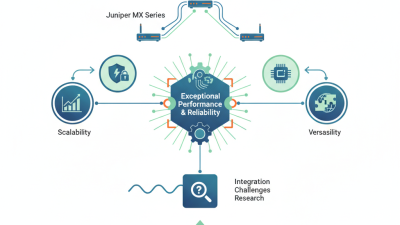
Scalability is another important aspect of these routers. They can adapt as network demands change. Features such as virtual network support enhance operational efficiency. This flexibility means organizations can implement new services without overhauling existing infrastructure. Moreover, advanced security options are integrated, providing robust protection against cyber threats.
However, while these routers showcase impressive features, they require skilled management for optimization. Users might find the learning curve steep, especially regarding complex functionalities. Continuous monitoring and configuration adjustments are essential. Balancing performance and security can be challenging. Investing time into training or hiring knowledgeable staff is crucial for maximizing their potential.
Comparison of the Top 10 Juniper MX Series Models
The Juniper MX Series routers stand out for their robust performance and versatility. When analyzing the top models, considerations include throughput capabilities, scalability, and service provider features. Recent industry reports indicate that the MX Series can handle traffic loads exceeding 1 terabit per second. This makes them particularly appealing to large enterprises and telecommunications companies.
One critical aspect to evaluate is the software capabilities. The versatility of Juniper's operating system enhances network management and automation. However, a notable challenge is the learning curve associated with their advanced features. Organizations may require extensive training for their teams to maximize potential benefits.
Tip: Regularly consult user forums to understand common challenges and solutions from peers. This can provide valuable insights that official documentation might overlook.
The modular design of the MX Series allows for future upgrades. However, one must consider the initial investment versus long-term value. Some buyers might find the upfront costs daunting, causing hesitation. Balancing immediate needs against future expansions is key.
Tip: A phased deployment strategy can minimize risk and spread costs over time. This approach may aid in a smoother transition.
Considerations for Selecting the Right MX Router for Your Needs
When selecting a router from the MX Series, consider your specific needs. The right router can enhance your network efficiency dramatically. Assess your bandwidth requirements first. Different models cater to varying throughput levels. Some may suit smaller networks, while others are better for larger enterprises.
Evaluate your operational environment. Are you managing a data center or just a branch office? This distinction can guide your choice. Take into account future growth as well. Some routers allow easy upgrades. A flexible router can adapt as your business expands.
Security features should also be a priority. Ensure the router supports necessary protocols. Robust security can prevent data breaches. However, remember that no solution is perfect. Each router has its limitations. Conduct thorough research to identify potential gaps. This approach will lead you to a more informed decision.
Global Market Trends and Pricing for Juniper MX Series Routers
The global market for networking equipment reflects ongoing trends in technology and investment. According to recent industry reports, Juniper MX Series Routers hold a significant share in this ever-evolving sector. A survey conducted by IDC reveals that demand for high-capacity routing solutions surged by 15% in the last year. This data indicates a strong preference for scalable options that enhance network efficiency.
Pricing strategies are also crucial. Recent analyses show that the average price of MX Series routers varies significantly depending on features and configurations. Basic models start around $5,000, while advanced versions can reach over $50,000. This pricing disparity reflects the diverse needs of global customers. Often, businesses struggle to balance cost and performance. They invest heavily in infrastructure, but not all choose the best options. It's a constant challenge to align available budget with high-end capabilities.
As the market develops, competition will intensify. This environment may impact future pricing. Experienced buyers must remain vigilant. They should track trends and consider future requirements. Reports suggest that IoT expansion will further drive the market. Observing these patterns can help businesses make informed decisions. Understanding these complexities is vital for successful investments in networking technologies.
Top 10 Juniper MX Series Routers for Global Buyers
| Model |
Max Capacity (Gbps) |
Port Density |
Power Consumption (Watts) |
Estimated Price (USD) |
| MX2010 |
1,000 |
32 |
300 |
$25,000 |
| MX2020 |
2,000 |
48 |
400 |
$50,000 |
| MX240 |
500 |
16 |
250 |
$20,000 |
| MX480 |
1,200 |
32 |
300 |
$35,000 |
| MX960 |
2,000 |
48 |
500 |
$75,000 |
| MX150 |
400 |
12 |
200 |
$15,000 |
| MX100 |
200 |
8 |
150 |
$10,000 |
| MX104 |
1,000 |
24 |
350 |
$30,000 |
| MX960 with 3D |
2,400 |
64 |
600 |
$90,000 |
| MX480 with 3D |
1,600 |
48 |
400 |
$55,000 |