What is an Enterprise Switch and How Does it Work?
Enterprise Switches play a critical role in modern network infrastructure. These devices manage data traffic effectively, connecting multiple devices within a local area network (LAN). Their operation is crucial for both small businesses and large enterprises.
Understanding how Enterprise Switches work can help organizations optimize their networks. They prioritize data packets, ensuring seamless communication between computers, servers, and printers. This enhances productivity and reduces delays, a necessity in today’s fast-paced business environment.
Despite their advantages, managing Enterprise Switches can be complex. Network administrators must configure settings carefully. Misconfiguration can lead to performance issues. Hence, continuous monitoring and adjustment are essential for optimal functionality. While Enterprise Switches are powerful, they require ongoing attention to ensure they serve their intended purpose effectively.

What is an Enterprise Switch: Definition and Significance
An enterprise switch is more than just a connectivity device. It plays a crucial role in networking environments. According to a recent industry report by MarketsandMarkets, the enterprise network switch market is expected to grow from $16.8 billion in 2022 to $29.4 billion by 2026, reflecting a significant demand for effective data management.
Enterprise switches facilitate the connection of multiple devices in a network. They handle high levels of traffic, enabling data packets to move swiftly and efficiently. However, managing these switches can be complex. Many organizations struggle with configuration errors and network bottlenecks. A survey from IDC highlights that nearly 30% of IT teams cite network complexity as their primary challenge in maintaining performance.
Security is another critical aspect. As more devices connect to the network, vulnerabilities increase. According to Cybersecurity Ventures, cybercrime damage is predicted to hit $10.5 trillion annually by 2025. This emphasizes the need for robust network management and monitoring tools. Enterprises must reflect on their current strategies and enhance their infrastructure to avoid potential pitfalls.
Enterprise Switch Performance Comparison
This chart illustrates the throughput performance of different enterprise switches measured in Mbps. The data shows a comparative analysis, highlighting the effectiveness of each switch.
Core Functions of Enterprise Switches in Network Infrastructure
Enterprise switches play a crucial role in network infrastructure. They connect multiple devices within a local area network (LAN). This connection supports efficient data transfer. Each device, like computers and printers, communicates via the switch. These switches can handle large volumes of data traffic. They prioritize information based on what needs immediate attention.
One of their core functions is VLAN support. VLANs separate network segments efficiently. This separation enhances security and reduces broadcast traffic. Another important function is link aggregation. It combines multiple connections to increase bandwidth, improving performance. However, misconfiguration can lead to network issues. Performance may drop if not set up correctly.
Quality of Service (QoS) is another essential feature. QoS prioritizes critical applications, ensuring smoother performance. This is especially useful for voice and video data. But, if improperly managed, it can create bottlenecks. Balancing resource allocation remains a challenge for many. Overall, mastering enterprise switches requires experience and reflection on past missteps.
Understanding the Architecture of an Enterprise Switch
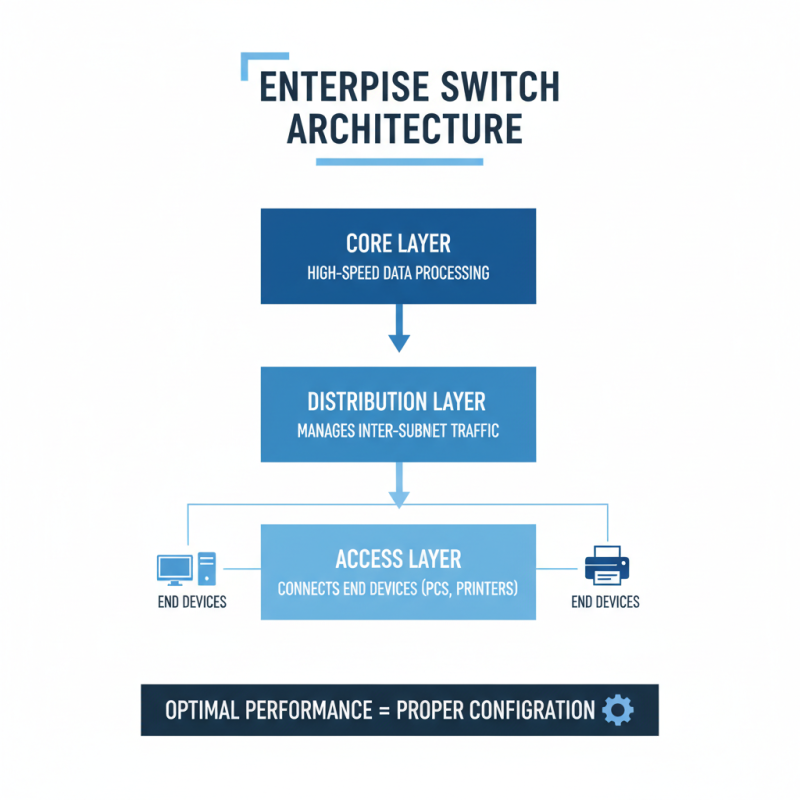
An enterprise switch plays a critical role in managing network traffic within a business. Its architecture consists of multiple layers, each serving a unique function. The core layer handles high-speed data processing, while the distribution layer manages traffic between different subnets. Finally, the access layer connects end devices, such as computers and printers, to the network. Each layer must be configured properly for optimal performance.
Tips: Always consider scalability when selecting an enterprise switch. A well-sized switch can accommodate future growth. Think about how many devices you currently have and anticipate future needs. Also, ensure you're aware of the physical layout of your space. Cable management can greatly affect performance and maintenance.
The design of an enterprise switch isn't flawless. The interaction between layers can be complex. Poor configuration may lead to bottlenecks, impacting network efficiency. Regular monitoring and updates are essential for smooth operations. It's easy to overlook these elements in a busy environment, but they are crucial for maintaining a robust network.
Common Features of Enterprise Switches and their Benefits
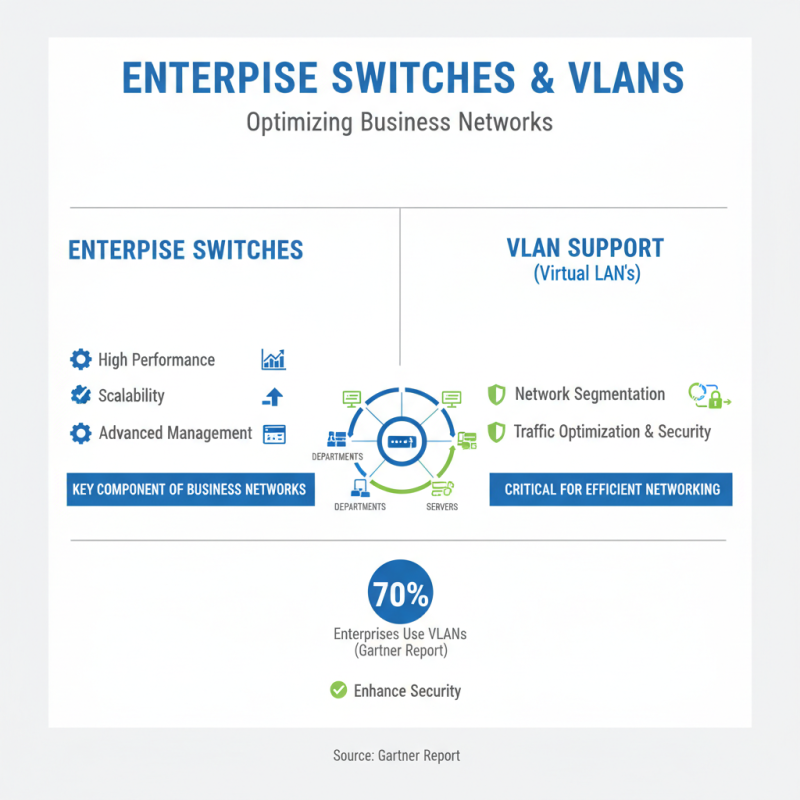
Enterprise switches are critical components of business networks. They provide high performance, scalability, and advanced management features. One common feature is VLAN support. This allows businesses to segment their networks efficiently. According to a report by Gartner, more than 70% of enterprises utilize VLANs to optimize traffic and enhance security within their local area networks.
Another vital feature is Quality of Service (QoS). QoS prioritizes network traffic, ensuring that critical applications receive the bandwidth they need. This is particularly important for voice and video communications. Research indicates that businesses that implement QoS see a 40% improvement in application performance. However, some companies struggle with the complexity of configuring QoS settings. Proper training and understanding are essential.
Security features are crucial too. Many enterprise switches offer advanced security protocols to protect sensitive data. Features like port security and MAC address filtering can prevent unauthorized access. According to Cisco, 70% of data breaches involve internal actors. Thus, having robust security measures on switches is vital for any organization. But, companies often overlook the need for regular updates and audits on these security settings. This can leave vulnerabilities in their networks.
How to Choose the Right Enterprise Switch for Your Organization
Choosing the right enterprise switch for your organization is vital. An enterprise switch serves as the backbone of network connectivity. It impacts performance, scalability, and security. Each organization has unique needs. Understanding these needs is essential before making a decision.
Consider the network size. Larger networks often require switches with higher port densities. According to a recent report, 79% of organizations use 10GbE or higher switches to ensure efficiency and speed. Security features are also critical. With cyber threats on the rise, features like VLAN support and access control lists are crucial for safeguarding data.
Next, assess your budget. While investing in high-quality switches is essential, spending too much can strain resources. Research shows that organizations often overspend by 30% when making purchasing decisions without comprehensive planning. Keep future expansion in mind; flexible solutions can prevent costly overhauls later. Aim for reliability, but recognize that not all solutions fit every organization perfectly. Balancing cost, performance, and features can be challenging but necessary for long-term success.
What is an Enterprise Switch and How Does it Work? - How to Choose the Right Enterprise Switch for Your Organization
| Feature |
Description |
Importance |
| Port Count |
Number of ports available on the switch (e.g., 24, 48) |
Critical for determining the size of the network |
| Speed |
Data transfer rate (e.g., 1 Gbps, 10 Gbps) |
Affects the performance and speed of the network |
| Layer Type |
Layer 2 (Data Link) or Layer 3 (Network) |
Determines routing capabilities and use cases |
| Management |
Managed, Unmanaged, or Smart switches |
Impacts control over the network configurations |
| PoE Support |
Power over Ethernet capability for devices |
Convenient for powering IP phones and cameras |
| Redundancy Features |
Support for link aggregation and failover protocols |
Enhances network reliability |
| VLAN Support |
Ability to segment networks into Virtual LANs |
Improves security and traffic management |